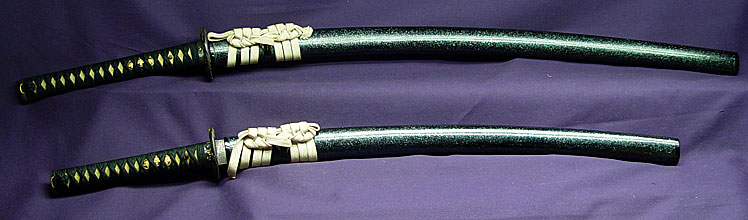
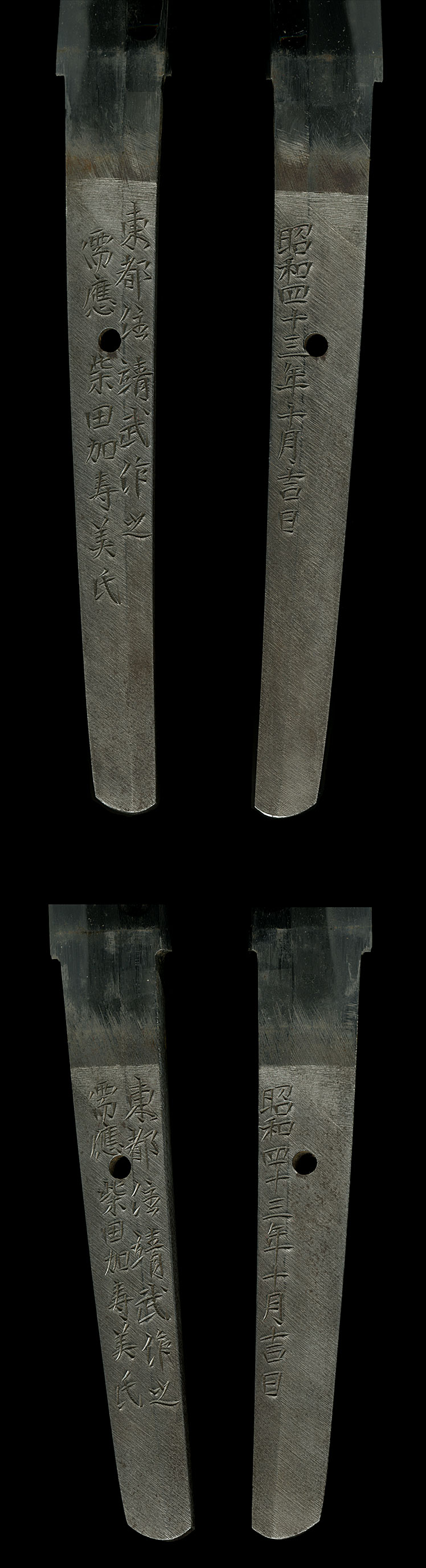
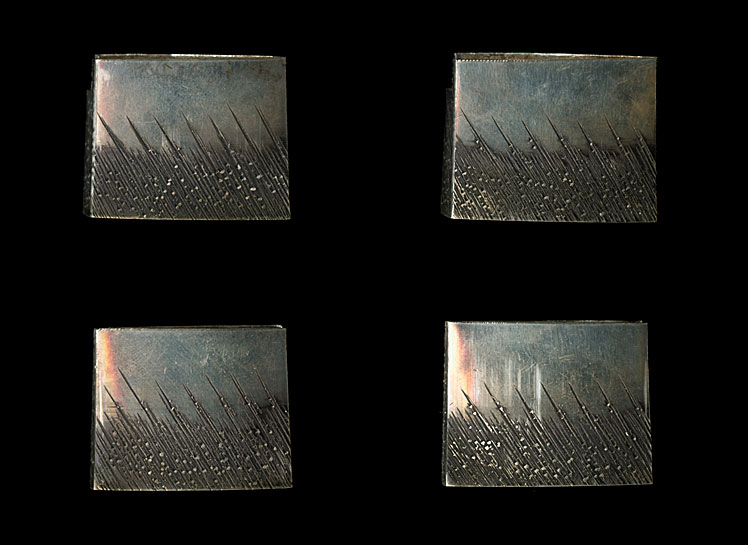
Rare true Daisho by the last Yasukuni shrine sword smith. Yakuwa Yasutake was one of the last of the Yasukuni smiths, and was one of the earliest Mukansa ranked smiths after the war. He was well versed in many traditions of swordmaking, but could not show his skill until after the war. Then he had the freedom to make blades in the fashion that he loved rather than what was expected of him by the tight standards set by the military when working for the Yasukuni Shrine. He was born in 1909 and passed away in 1984. He won many awards and is rated as one of the best of the Yasukuni smiths. This special ordered Dai –Sho set was made in 1968, and is a true Dai-Sho set as they are signed and dated the same. It is very rare during this time to have a Dai-Sho made by a modern smith, the making of true Dai-Sho ceased at the time of the Hattori edict that prohibited the wearing of swords, and thus the end of the Bushi system. Gendaito smiths rarely got the chance to make blades as their ancestors did in the past for the Samurai. So, one can see how rare and unusual it is to have a Dai-Sho in the 1960’s. This was also very expensive, as well thus the patron Shibata must have been a very affluent person. To even take this set even further, is the fact that they were also mounted in the traditional manner which was EVEN much more rare during those times.
The blades:
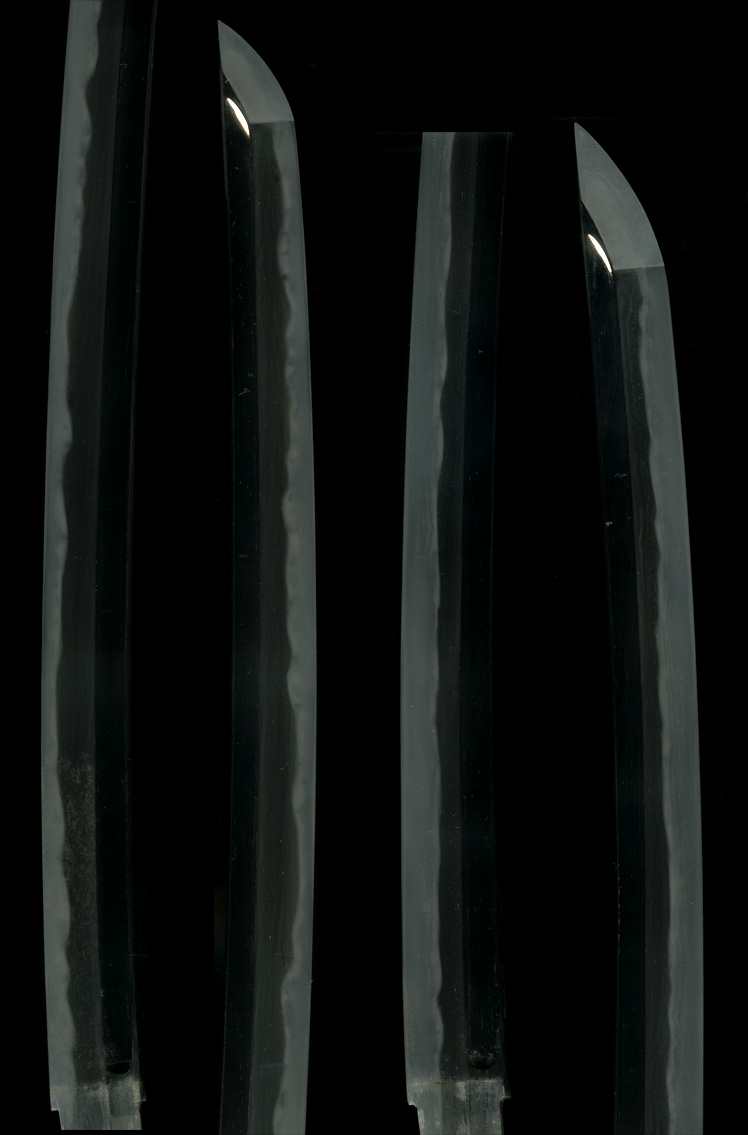
Dai – Very wide and strong shaped katana done in the fashion of the Kamakura Bizen School. The gunome choji midare hamon done in the style of perhaps Nagamitsu, with the ikubi kissaki found in the Bizen School during the 1200’s shows Yasutakes ability to reproduce the Bizen tradition well. The hamon has ashi and yo, and is made up of ko-nie. The jigane is a fine ko-itame with ji nie. A deeply carved groove extends throughout the blades length. Slight staining near the hamachi area, but can be polished out by one of our professional polishers for a nominal fee if desired. Tang is ubu 1 hole.
Sho- Wide strong wakizashi done in the form ofa Kotetsu in the Soshu tradition. A very nice nie deki sugu notare hamon with nice activity such as kinsuji runs up the blade. Strong masame chikei is easily seen all up the ji, and shows Yasutake’s skill as a Soshu den artist as well. It is very nice to have 2 blades made in 2 different styles, being able to enjoy great work in one set. A deep groove is cut throughout the blade as well matching the shape and style of the matching Katana.
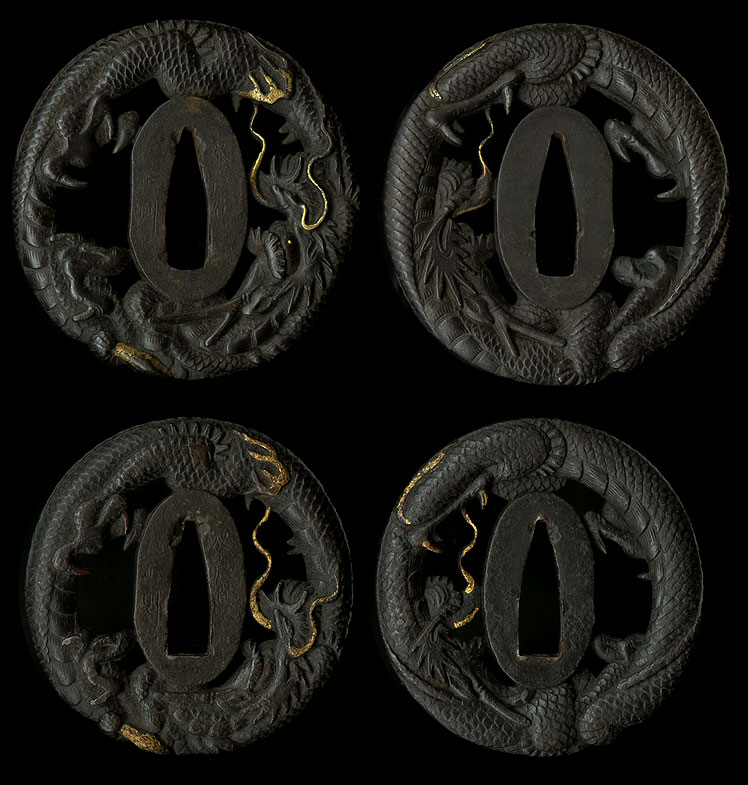
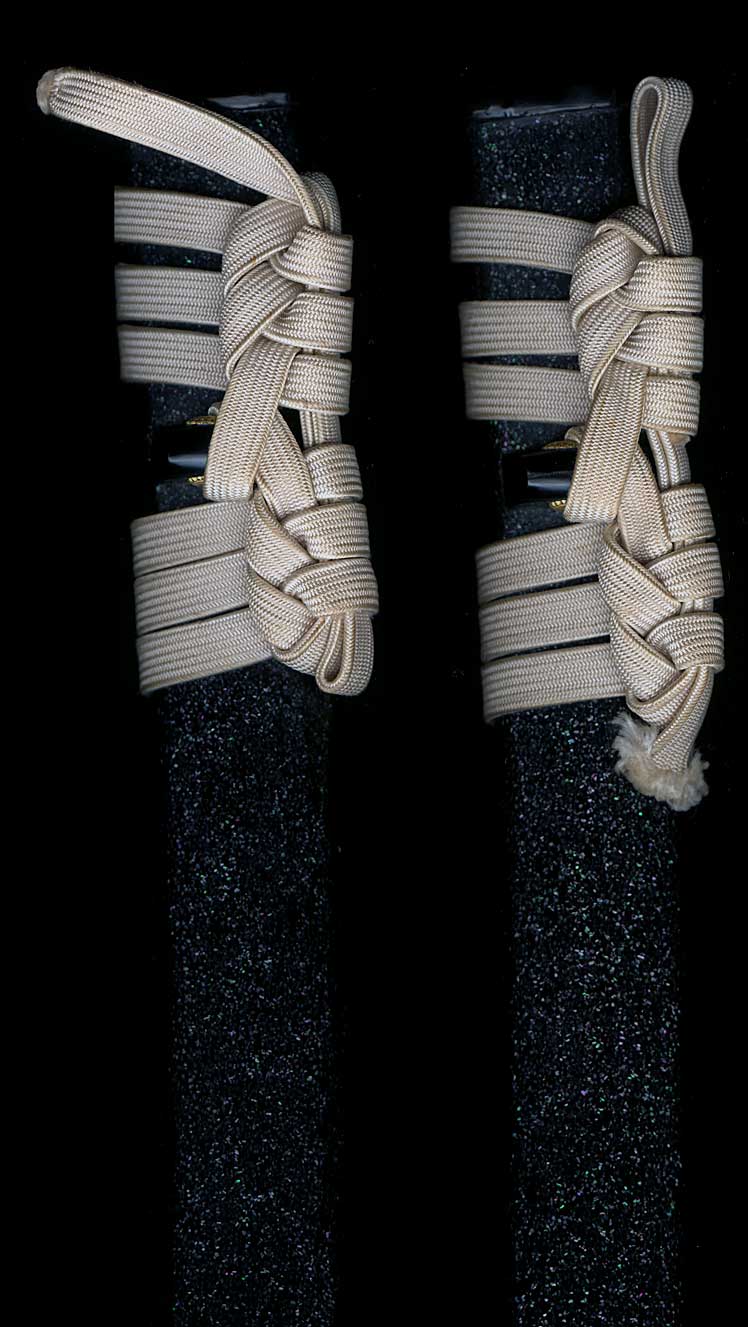
The mountings are done very nicely. The scabbards are well made and lacquered in fine mother of pearl. The handles are wrapped in dark black silk, with matching menuki of kiri mons. The fuchi kashira on the Dai are of a cherry blossoms / a bird swimming on the stream. The Sho fuchi kashira are shakudo with rabbits playing among the plants. The tsuba are strong iron plates signed “Mito Ju Masanori” and are believed to be genuine in signature. Accompanied with 2 nice sageo. Newly ordered, this set was probably around 4,000,000 yen when first ordered, and even now, the price would be the same if such an order was made by ANY Mukansa smith. |